Mastering the Art of Blackjack: Strategies for Success
Blackjack is one of the most iconic and popular casino games worldwide, enjoyed by millions for its blend of skill, strategy, and chance. With roots dating back to the 1700s, blackjack has evolved into a staple at both brick-and-mortar and online casinos. Unlike many other casino games that rely solely on luck, blackjack offers players the opportunity to use mathematical strategies to improve their odds and potentially tip the balance in their favor. In this comprehensive guide, we’ll explore the key principles, strategies, and expert tips you need to master the art of blackjack and increase your chances of success at the table.
The Basics of Blackjack: Rules and Gameplay
Before diving into strategies, it’s crucial to understand the basic rules and objectives of blackjack. The game is typically played with one to eight standard 52-card decks. The main goal is simple: beat the dealer by having a hand value closest to 21 without exceeding it.
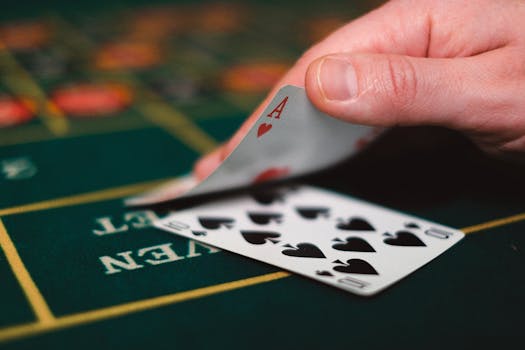
Card values are straightforward: - Number cards (2-10): face value - Face cards (Jack, Queen, King): 10 points each - Aces: 1 or 11 points, depending on which value is more favorable to the hand A round of blackjack proceeds as follows: 1. Each player is dealt two cards, usually face up. 2. The dealer receives two cards, one face up and one face down. 3. Players decide to “hit” (take another card), “stand” (keep current hand), “double down” (double the bet for one additional card), or “split” (if two cards of the same value are dealt). 4. The dealer reveals the face-down card and must hit until reaching at least 17. 5. The best possible hand is an Ace and a 10-value card, known as a "blackjack", which pays out 3:2 in most casinos.Fact: According to the American Gaming Association, blackjack is the most widely played casino banking game in the world, with an estimated 50 million Americans playing each year.
.png)
Understanding House Edge and Payouts
One of the reasons blackjack is so popular is its relatively low house edge—often as low as 0.5% when optimal strategy is used. This means that for every $100 wagered, the casino expects to keep just 50 cents on average. However, this edge can vary based on rules, the number of decks, and player decisions.
Here’s a quick overview comparing house edges for popular casino games:
| Game | House Edge (%) | Skill Involved |
|---|---|---|
| Blackjack (optimal play) | 0.5 | High |
| Roulette (European) | 2.7 | Low |
| Baccarat | 1.06 | Low |
| Slots | 2-15 | None |
| Craps (pass line) | 1.41 | Medium |
Basic Strategy: Your Foundation for Success
The backbone of any successful blackjack player’s arsenal is basic strategy—a mathematically derived set of rules dictating the optimal action for every possible hand combination against any dealer upcard. Developed through computer simulations, basic strategy minimizes the house edge and maximizes player returns.
For example, basic strategy tells you to: - Always stand on 17 or higher - Hit on 8 or lower - Double down on 11 against any dealer card except Ace - Split Aces and 8s, never split 5s or 10sFact: Following basic strategy can reduce the house edge from around 2% (for unskilled players) to as low as 0.5%.
Many casinos sell or allow strategy cards at the table to aid your decisions, and online resources abound. Memorizing the full chart can be daunting, but focusing on common situations, such as when to hit, stand, double, or split, dramatically improves your results.
Advanced Techniques: Card Counting and Beyond
While basic strategy evens the playing field, advanced players often employ card counting to gain a further edge. Contrary to popular belief, card counting is not illegal, but casinos discourage it and may ask skilled counters to leave.
Card counting works by tracking the ratio of high cards to low cards left in the deck: - High cards (10s, face cards, Aces) favor the player - Low cards (2-6) favor the dealerThe most famous system is the Hi-Lo count. Assign +1 to low cards (2-6), 0 to 7-9, and -1 to high cards (10-Ace). Maintain a running count as cards are dealt. When the count is high, increase your bets; when it’s low or negative, bet minimally.
Fact: Research by MIT’s Blackjack Team in the 1980s and 1990s proved that card counting could yield consistent profits, with the team reportedly winning over $10 million from casinos.
However, card counting is not easy. It requires intense concentration, excellent memory, and the ability to disguise your play. Casinos employ numerous countermeasures, such as frequent shuffling, multiple decks, and surveillance.
For most players, mastering basic strategy is a more accessible and practical way to improve results, but understanding card counting can be a fun intellectual challenge for those interested.
Bankroll Management: Playing Smart and Staying in the Game
No matter how skilled you are, effective bankroll management is crucial to long-term success in blackjack. Even the best players experience streaks of bad luck, so managing your money wisely ensures you can weather the inevitable ups and downs.
Tips for solid bankroll management: - Set a budget before you play and stick to it - Never chase losses or increase bets in desperation - Use betting units—typically 1-2% of your total bankroll per hand - Take regular breaks to avoid fatigue and poor decisions - If you’re ahead, consider pocketing some winnings or setting a “stop-loss” limitExample: If you bring $500 to the casino, a standard betting unit might be $10 per hand. This allows for 50 hands before risking your entire bankroll, giving you the best chance to ride out the variance.
Fact: According to studies, players who set clear limits and practice disciplined bankroll management report higher satisfaction and less stress compared to those who don’t.
Online vs. Live Blackjack: Key Differences and Tips
The rise of online casinos has made blackjack more accessible than ever, but there are important differences between virtual and live play.
| Aspect | Online Blackjack | Live Casino Blackjack |
|---|---|---|
| Speed | Faster (up to 100+ hands/hour) | Slower (about 50 hands/hour) |
| Atmosphere | Solo, digital interface | Social, real dealer and players |
| Decks Used | Typically 6-8, shuffled after each hand | Varies, continuous shuffling or manual |
| Minimum Bet | As low as $0.10 | Usually $5-$25 |
| Strategy Tools | Can use charts openly | Must memorize or use discreetly |
Conclusion: The Path to Blackjack Mastery
Mastering blackjack requires a blend of mathematical strategy, discipline, and self-control. While luck will always play a role in the short term, players who take the time to learn basic and advanced strategies can significantly improve their long-term results. Whether you’re playing online or in a bustling casino, remember that the key to success lies in making smart decisions, managing your bankroll, and enjoying the game responsibly.
With a house edge as low as 0.5%, blackjack offers some of the best odds in the casino for skilled players. By consistently applying the principles outlined in this guide, you’ll be well on your way to mastering the art of blackjack and enjoying countless hours of engaging, strategic play.