Decoding the Mystery of Casino Game Odds
The glittering lights, the buzz of anticipation, and the thrill of a potential win — casinos captivate millions worldwide. But beneath the surface of dazzling slot machines and green-felt tables lies a mathematical world that shapes every spin, roll, and deal. Casino game odds are more than just numbers; they are the foundation upon which the entire gaming industry is built. Whether you’re a casual player curious about your chances or a seasoned enthusiast seeking a deeper understanding, decoding the mystery of casino game odds can transform your approach to gambling and reveal why “the house always wins” over time. In this article, we’ll demystify the concepts behind odds, house edge, and probability, empowering you with the knowledge to play smarter and appreciate the true nature of casino games.
Understanding Casino Game Odds: The Basics
Casino game odds refer to the probability of a specific outcome occurring in a game. They are usually expressed as ratios, percentages, or decimal numbers, and they form the backbone of every casino game, from roulette to blackjack to slots. Understanding these odds isn’t just about calculating your chances of winning; it’s about grasping how the games are structured to ensure the casino’s profitability over the long run.
Let’s start with a simple example: the odds of flipping a fair coin and landing on heads are 1 in 2, or 50%. In casino games, the odds are rarely this straightforward. Each game incorporates a built-in advantage for the house, known as the "house edge," which ensures that, statistically, the casino makes a profit regardless of short-term wins or losses.
.png) For instance:
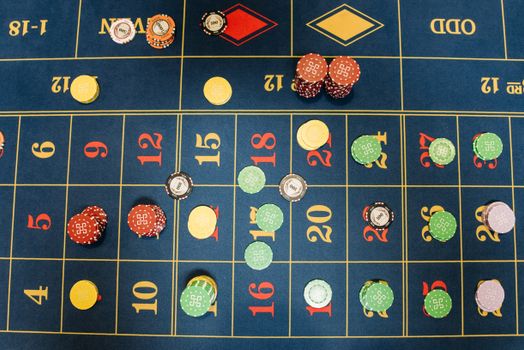
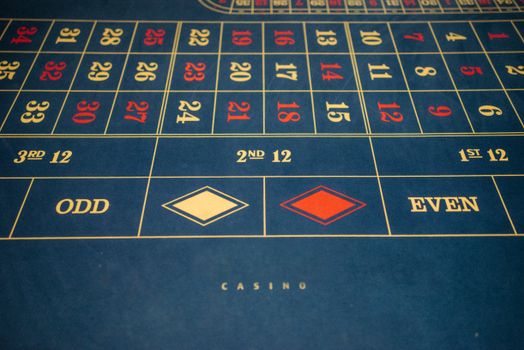
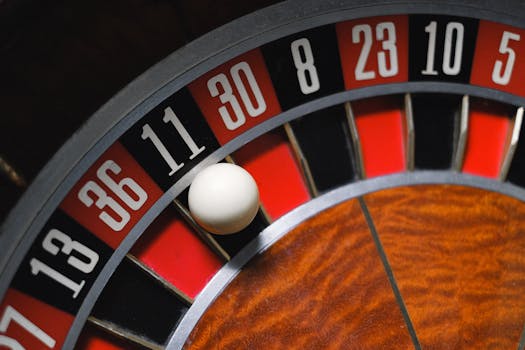
- In European roulette, there are 37 pockets (numbers 1-36 and a single zero). The odds of hitting a single number on a spin are 1 in 37, or approximately 2.70%.
- In American roulette, there are 38 pockets (including a double zero), making the odds of a single number 1 in 38, or about 2.63%.
For instance:
- In European roulette, there are 37 pockets (numbers 1-36 and a single zero). The odds of hitting a single number on a spin are 1 in 37, or approximately 2.70%.
- In American roulette, there are 38 pockets (including a double zero), making the odds of a single number 1 in 38, or about 2.63%.
This slight difference may seem negligible, but over thousands of spins, it translates into significant revenue for the casino. The house edge, therefore, is not about guaranteeing the casino a win every time, but about ensuring profitability in the long run.
The House Edge: Why the Casino Always Wins (Eventually)
The house edge is the percentage of each bet that the casino expects to keep over the long term. It is the statistical advantage built into every game, and it varies widely between different games and even between different bets within the same game.
Here are some examples of common casino games and their typical house edges: - Blackjack (with optimal strategy): 0.5% to 1% - Baccarat (banker bet): 1.06% - European Roulette: 2.7% - American Roulette: 5.26% - Slot Machines: 2% to 15% (varies by machine)To illustrate how the house edge works, consider a player wagering $100 per hour on European roulette. With a 2.7% house edge, the expected loss over an hour would be $2.70. Over time and with higher betting volumes, these small percentages add up, ensuring the casino remains profitable.
A real-world statistic underscores this: According to the American Gaming Association, U.S. commercial casinos generated $53 billion in gaming revenue in 2021, much of which was due to the house edge across various games.
Probability, Payouts, and Player Choices
While the house edge sets the underlying odds in favor of the casino, not all bets are created equal. The payouts offered for specific bets are often designed to be less than the true odds of winning, which is how the house maintains its edge. For players, understanding the distinction between "true odds" and "payout odds" is crucial.
True odds refer to the actual probability of an event occurring. Payout odds, on the other hand, are the odds the casino uses to determine how much it pays out on a winning bet. When payout odds are less favorable than true odds, the difference is the casino's profit margin.
For example, in American roulette: - A straight-up bet on a single number pays 35 to 1. - The true odds of winning this bet are 1 in 38. - If the casino paid out the true odds (37 to 1), there would be no house edge.This structure is consistent across many games. In slot machines, for instance, the random number generator (RNG) determines which symbols appear, and the payouts for different combinations are set below the true odds of those combinations.
Understanding how to compare house edge and payout odds can help players make more informed choices. For instance, in craps, the "Pass Line" bet has a house edge of 1.41%, while betting on "Any 7" carries a hefty house edge of 16.67%. Clearly, not all bets are equally advantageous for the player.
Game Comparisons: Odds and House Edge at a Glance
To better illustrate how odds and house edge vary between popular casino games, here’s a comparative overview:
| Game | Bet Type | House Edge (%) | True Odds | Payout Odds |
|---|---|---|---|---|
| Blackjack | Base Game (with optimal play) | 0.5 - 1 | Varies | 1:1 |
| Roulette (European) | Single Number | 2.7 | 1 in 37 | 35:1 |
| Roulette (American) | Single Number | 5.26 | 1 in 38 | 35:1 |
| Baccarat | Banker | 1.06 | 45.86% | 1:1 (minus 5% commission) |
| Craps | Pass Line | 1.41 | 251:244 | 1:1 |
| Slot Machines | Varies | 2 - 15 | Varies | Varies |
This table demonstrates not only the variation in house edge but also how payout odds often differ from the true odds. Choosing bets with a lower house edge can significantly improve your long-term chances, though no bet can overcome the house advantage in the long run.
Randomness, Volatility, and Short-Term Luck
If the house always has an edge, why do players sometimes win big? The answer lies in the concepts of randomness and volatility. Casino games, especially slots and table games like roulette, are designed to be unpredictable in the short term due to random outcomes.
Volatility, or variance, refers to how much the outcomes of a game can swing above or below the statistical average in the short run. High-volatility games, such as some slots or single-number bets in roulette, can produce big wins or losses over a short period. Conversely, lower-volatility games yield smaller, more frequent payouts.
For example, Mega Moolah, a famous progressive slot, once paid a record jackpot of over $20 million in 2018, despite the odds of hitting the top prize being less than 1 in 50 million. These rare wins are possible because randomness allows for short-term deviations from statistical averages, even though the house edge prevails in the long term.
Randomness is enforced in online casinos through certified Random Number Generators (RNGs), which are regularly tested by independent agencies such as eCOGRA or GLI to ensure fair play.
Skill vs. Chance: Can You Beat the Odds?
Not all casino games rely purely on luck. Some, like blackjack and poker, introduce elements of skill that can influence outcomes. Understanding the math behind odds and using optimal strategies can reduce the house edge, though it’s never completely eliminated.
For instance, in blackjack, using basic strategy can lower the house edge to as little as 0.5%. Card counting, while frowned upon in most casinos, can theoretically give a player a slight edge, though this requires exceptional skill, memory, and discipline.
In games like slots or roulette, however, skill has little or no effect. The outcomes are determined by random events, and no strategy can alter the house edge.
It’s important to be wary of myths and misconceptions. Systems like the Martingale (doubling your bet after each loss) do not change the underlying odds and can lead to significant losses. Knowledge of odds and house edge can help players avoid these pitfalls and approach games with realistic expectations.
Conclusion: Empowering Players Through Knowledge
Decoding casino game odds is not about finding ways to beat the house, but about understanding how the games work and making informed choices. Whether you’re spinning the roulette wheel, trying your luck at the slots, or playing a hand of blackjack, knowing the odds and house edge helps you manage expectations, set limits, and enjoy the experience responsibly.
Casinos are designed for entertainment, and the odds ensure that the house retains a statistical advantage over time. However, with a solid grasp of the numbers, you can enjoy the thrill of the game, appreciate occasional wins, and play smarter.